Retail Cleanup
Retail sewage cleanup
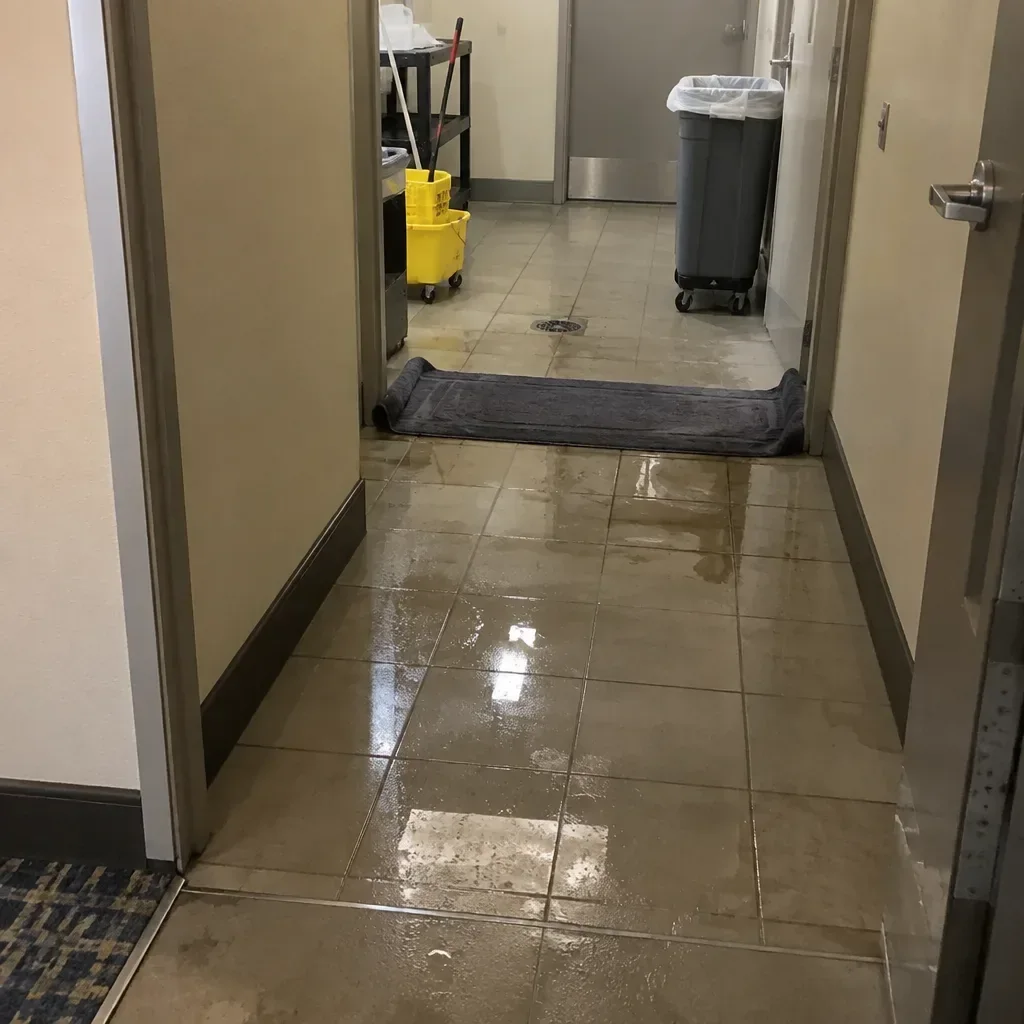
Coordinate hotel sewage cleanup by address, linking room impacts and shared-space work to each property’s operating plan.
Record the source and visible spread before cleanup begins, and keep affected materials separate from items that remain clean. Use a phased work plan that fits hotel operations, then review each area’s condition before returning it to service.
For a hotel in Longmont, the first decision is which rooms and shared spaces belong in the same work plan. A guest room backup may affect the corridor outside it, while a separate incident at another address can require its own boundaries and schedule. One scope can track each location without treating every building as identical. Commercial sewage cleanup costs can shift with the number of affected spaces, the materials involved, and how work can proceed around hotel operations.
Start with access and exposure: keep guests and staff out of affected areas, then identify how sewage and debris could move between rooms and common routes. A closed guest room does not automatically protect a nearby elevator lobby or service passage. At a Longmont property, note which entrances and staff routes remain usable so the work area can be separated from clean spaces and daily hotel activity can be directed around it.
Build the location record before contents shift. On a floor plan, mark the room, adjoining spaces, shared facilities, and any separate hotel address included in the request; add dated observations and photos of affected furnishings and finishes. Dickens Farm Nature Area or the St. Vrain Greenway can help orient a Longmont address in a discussion, but neither identifies what was damaged inside. The useful record connects each image and note to a specific room or common area.
Give front desk, housekeeping, and facilities staff one current room status they can act on: restricted, under assessment, in active work, or awaiting review. That keeps a room from being assigned while access or cleaning is still underway. For a Longmont hotel, share changes through the same operating channel staff already check, and assign one person to update the room list when a boundary or access condition changes.
Shared areas need their own sequence because guests and staff may rely on the same halls, lifts, or service routes. Work can be arranged by floor or by separated zone, with access adjusted as each area is addressed. If a Longmont lobby remains open, the route to it should not pass through the cleanup boundary. A marked alternate path helps housekeeping and deliveries avoid carrying debris or contamination into other parts of the hotel.
| Hotel zone | Work sequence | File notes |
|---|---|---|
| Guest rooms | Tie room numbers to each property address | Note sewage reach and materials at each site |
| Guest circulation | Set a contained work route per building | Assess surfaces along each route |
| Room separation | Arrange check-in away from active work | Review entry and waiting areas before use |
| Dining space | Schedule work around meal service | Identify affected floors and nearby surfaces |
| Meal service spaces | Keep affected stock apart at each address | Record items needing separate handling |
| Staff rooms | Coordinate entry with shift leads | Check cleaning and moisture status by room |
| Meeting rooms | Move bookings for the affected location | Review floors, walls, and furnishings |
| Building access | Assign a site contact for each address | Compare work status before restoring use |
Before moving belongings, identify what belongs to a guest, what belongs to the hotel, and what is rented or supplied by another party. Photograph items in place and note their room and condition; then follow the hotel’s handling process for guest property and obtain the right authorization for hotel-owned items. This matters during hospitality cleanup because a damaged furnishing may be part of a room inventory while a guest’s belongings require separate care.
A hotel group can keep a common scope across addresses by using the same categories for rooms, contents, shared areas, access limits, and work status. Each site still needs its own observations and decisions. For Longmont locations, list the street address and building or wing clearly; a familiar reference such as Sandstone Ranch may help orient a conversation, but it cannot replace address-specific notes about affected spaces.
Keep the property agreement and relevant policy information available for the manager responsible for approvals. They may affect who can authorize access or removal, while insurance terms depend on the particular policy. Do not assign payment or responsibility based on the address alone. If a hotel operates at multiple Longmont addresses, record which agreement and policy apply to each site so a decision for one building is not carried over without review.
Assessment should follow the path contamination could take, including lower surfaces, nearby furnishings, and adjoining areas where splashing or tracked material may have reached. Record what is affected before setting the work boundary. In Longmont, a plan that marks each room and common area helps staff understand why a corridor or service space may be included even when the original guest room is the obvious source of the disruption.
Cleanup work generally moves from isolating the affected zone to removing sewage and materials that cannot be adequately cleaned, then cleaning and disinfecting suitable surfaces. Disinfectants should be used according to their labels, including safety directions and contact time. After that, affected building materials are dried and odor treatment may be considered. The approach depends on what the assessment finds in each part of the hotel, not on a single rule for every room.
A room’s return to service should follow a review of its actual condition. Check that the planned cleaning and disinfection have been completed, remaining materials are dry, and the boundary can be removed without exposing guests or staff to unfinished work. Longmont hotel managers can record the review outcome beside the room status, then ask the independent cleanup professional to explain any area that still needs attention before it is assigned again.
Phasing can preserve hotel operations where routes and work zones are genuinely separate. For example, a floor with an isolated access path may be handled apart from a shared corridor needed by guests. Map those connections rather than assuming a closed room is self-contained. Around a Longmont property, landmarks such as Left Hand Creek can orient the address for planning, while the interior floor plan determines which areas can remain in use.
Ask the independent cleanup professional to walk through the proposed boundaries, room sequence, shared-space access, and the conditions that will be reviewed before each zone returns to use. For a hotel group, request one scope format that can be applied at every included address, with site-specific findings recorded separately. That makes it easier for Longmont facilities staff to compare progress without confusing one building’s restrictions with another’s.
A practical next step is to map affected guest rooms and shared spaces at each address, then discuss a phased assessment and cleanup plan with an independent cleanup professional. Include room status, access routes, contents that need review, and any operational limits staff have identified. If the hotel is in Longmont, use its full street address in the request; the city’s sewer guidance distinguishes investigation of reported backups, but an address alone does not establish the cause.
For hotels operating at several Longmont addresses, commercial sewage cleanup costs depend on what each property assessment finds: affected room count, shared spaces involved, and materials that need different treatment. A common scope can set the same reporting categories and work sequence across the portfolio, while leaving each building’s findings specific to its address. A guest room backup beside Dickens Farm Nature Area may affect a different route or set of contents than a problem near Sandstone Ranch. Compare assessed conditions before budgeting; absorbent finishes and drying needs can change the work.
Homes may use different wastewater arrangements, so verify local fit for contamination cleanup at the property; the linked communities outline where the pros we connect you with work, includingMead, Dacono and Frederick. Before arranging an inspection, confirm any travel charge and whether the pros we connect you with can reach an address beyond their usual area.
A restaurant storage area and a larger customer space can call for different cleanup scopes. Commercial quotes commonly reflect the size of the affected area and the number of visits; $7,000–$14,000 is the guide figure. Sewer-line troubleshooting and repairs require a plumber.For a Longmont business, affected rooms, materials and equipment shape the work list and price. When calling, describe where sewage reached and which spaces need to remain usable; a location reference such as Legacy Trail can help identify the site. Plumbing diagnosis or repair is separate.The affected area and materials needing attention shape the estimate; pricing guide explains cost factors, while commercial overview shows how commercial jobs are organized.
Retail sewage cleanup
Food Service Cleanup
Longmont Office Guide
Start by closing off the impacted guest rooms and shared zones, then coordinate alternate guest and staff routes with hotel operations. Keep people away while the cleanup professional assesses how far contamination reached and establishes separation from clean areas. Work can then proceed in stages, with the schedule and access boundaries adjusted for each property. In Longmont, map entrances and service paths separately for each address so the same plan does not assume identical layouts.
Keep an address-specific record of which rooms, corridors, and shared facilities are affected, with dated notes and photos of visible conditions and impacted contents. Give each property its own section in the operating log, then note when access changes or an area returns to review. This lets managers compare impacts across locations without mixing room inventories. A hotel near the St. Vrain Greenway should still be documented by its actual street address and affected spaces.
Before a room or shared area returns to use, review the assessment for remaining contamination, confirm affected surfaces were cleaned and disinfected, and check that damp structural materials have dried. Porous finishes may require removal if sewage reached them. The cleanup professional should assess the specific area; managers can then coordinate its return with hotel operations. A Longmont property’s reopening decision should reflect its own findings, not another address’s progress.
Confirm the property’s wastewater provider, sewage source, and any requirements that apply at that address before setting responsibilities. Note when odors, slow drains, or unusual sounds appear, since those observations can help narrow the reported issue. Keep that address-level check separate for every hotel location; do not assume the same provider or responsibility applies across the portfolio.
Map each affected address and its guest and shared areas, then review a phased assessment plan with an independent cleanup professional.
Call (303) 879-2581